
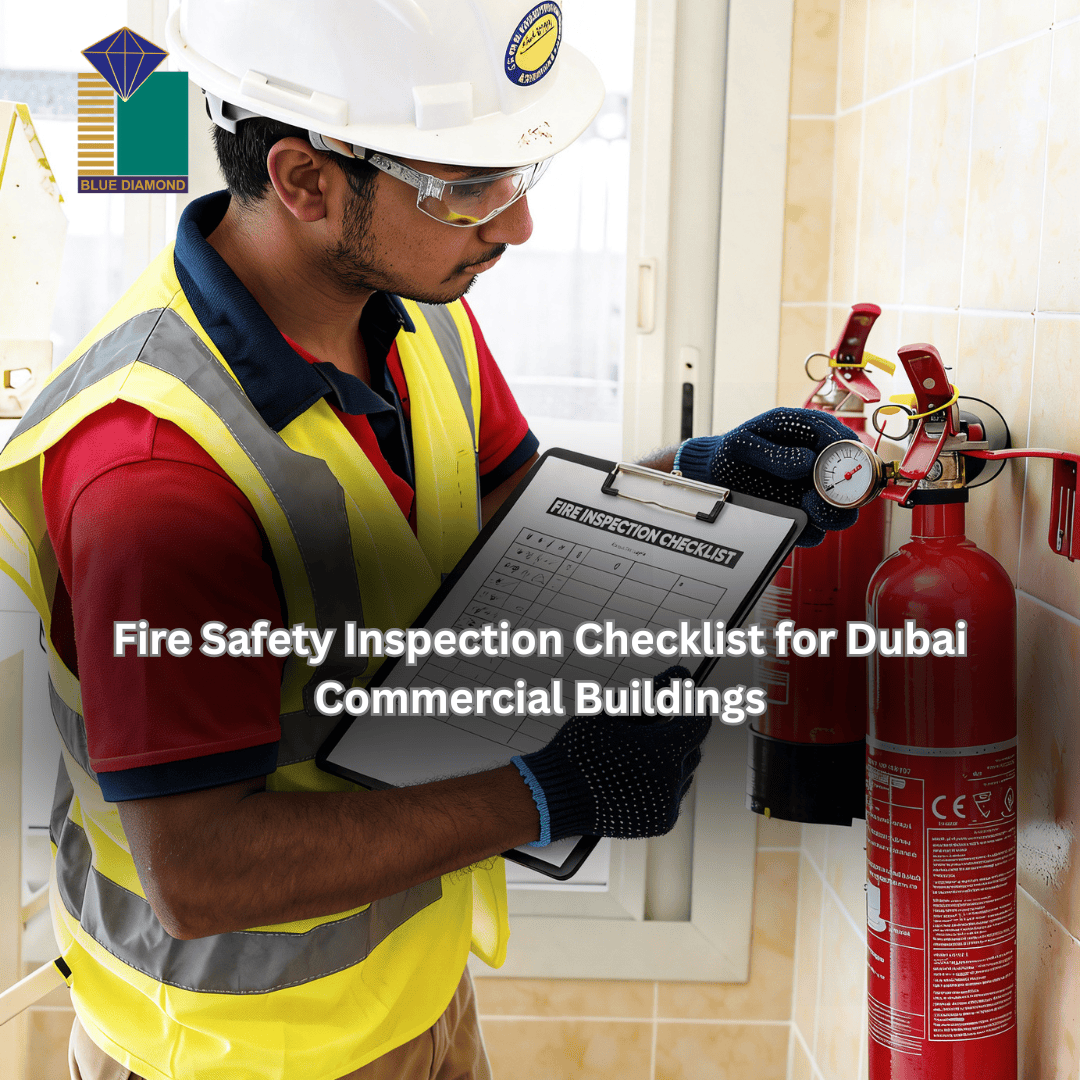
A Fire Safety Inspection Checklist can make all the difference between a safe working environment and a potentially dangerous emergency. Imagine a busy morning in a Dubai office building where employees are preparing for meetings and customers are arriving. Suddenly, a burning smell comes from a storage room. An employee reaches for a fire extinguisher, only to discover that it has not been serviced recently. At the same time, boxes are obstructing the nearest emergency exit.
What began as an ordinary working day could quickly turn into a serious emergency. This is why regular fire safety checks are essential for commercial buildings. By identifying potential hazards early, property owners and facility managers can help protect lives, minimise property damage, and maintain compliance with applicable UAE fire safety requirements.
Why Fire Safety Inspection Matters in Dubai
Dubai’s commercial buildings often operate around the clock, with electrical equipment, air-conditioning systems, kitchens, storage areas, and hundreds of people sharing the same premises. Without proper precautions, even a minor fault can create significant risks.
A professional Fire Safety Inspection helps identify unsafe conditions before they become emergencies. It also helps property owners and facility managers assess whether fire protection systems are accessible, maintained, and ready to perform when needed.
Regular inspections should form part of a broader fire safety and preventive maintenance plan, aligned with applicable Dubai Civil Defence requirements and the building’s specific risk profile.
Fire Safety Inspection Checklist for Commercial Buildings
Use the following checklist as a guide for conducting regular fire safety inspections at your property.
1. Fire Alarm and Detection Systems
Fire alarms and smoke detectors provide early warnings that allow occupants to respond quickly.
Check that:
- Smoke and heat detectors are correctly positioned and unobstructed.
- Manual call points are accessible and clearly identified.
- Alarm panels show normal operating conditions.
- Audible and visual alarms function during authorized testing.
- All inspection, testing, and maintenance records are current and properly maintained
Any fault should be reported promptly and addressed by a qualified technician.
- Fire Extinguishers and Firefighting Equipment
Fire extinguishers must be suitable for the hazards present in each area and readily accessible.
During a Fire Safety Inspection, verify that:
- Extinguishers are visible and not blocked by furniture or stock.
- Safety pins, seals, hoses, and pressure indicators are in acceptable condition.
- Servicing labels and inspection records are current.
- Fire hose reels and cabinets are accessible.
- Firefighting equipment is appropriate for the relevant fire risks.
Do not wait until an emergency to discover that essential equipment is damaged or difficult to reach.
- Emergency Exits and Evacuation Routes
A clear escape route can make a critical difference during a fire.
Inspect all emergency exits, corridors, staircases, and exit doors. Confirm that exit signs and emergency lighting are operational, doors are not improperly locked or obstructed, and evacuation routes remain clear.
Fire evacuation plans should be displayed where required, and employees should understand the designated assembly points and emergency procedures.
- Electrical Systems and Potential Fire Hazards
Electrical faults, overloaded sockets, damaged cables, and poorly maintained equipment can increase fire risk.
Look for exposed wiring, overheating signs, damaged plugs, and unsafe extension-lead arrangements. Ensure electrical rooms remain secure and free from unnecessary storage.
Any electrical repair or testing should be carried out by appropriately qualified personnel.
- Sprinklers and Other Fire Protection Systems
Depending on the building, fire protection systems may include automatic sprinklers, fire pumps, standpipes, and other fixed firefighting installations.
Check that sprinkler heads are not damaged, painted, or obstructed; valves remain in their required positions; and maintenance records are available. Fire pumps and associated equipment should be inspected and tested according to the applicable standards and manufacturer recommendations.
A Fire Safety Inspection should also identify reported faults and confirm that corrective action has been completed.
- Housekeeping and Fire Prevention
Good housekeeping is one of the simplest ways to reduce preventable fire hazards.
Ensure that combustible waste is removed regularly, flammable materials are stored appropriately, and equipment is not placed near potential ignition sources. Kitchens, workshops, loading bays, and storage rooms may need additional checks based on their activities.
- Staff Training and Emergency Preparedness
Even well-maintained systems cannot replace employee awareness.
Provide appropriate fire safety training, explain alarm procedures, and conduct evacuation drills as required. Staff should know how to raise an alarm, contact emergency services, and evacuate safely without using lifts where prohibited during a fire.
How Often Should Commercial Buildings Be Inspected?
Inspection frequency depends on the building’s occupancy, fire risk, equipment, applicable regulations, and maintenance requirements. Routine visual checks can help identify obvious hazards, while specialist testing and servicing must follow the relevant schedules and technical requirements.
Property managers should maintain a documented inspection programme, record identified defects, assign corrective actions, and verify that problems have been resolved. A checklist supports this process but does not replace a professional assessment or mandatory inspections.
Common Fire Safety Mistakes Businesses Should Avoid
Some fire hazards remain unnoticed because daily operations take priority. Common mistakes include blocking emergency exits, ignoring alarm panel warnings, overlooking expired or overdue equipment servicing, storing materials in electrical rooms, and failing to update evacuation arrangements after renovations.
Another frequent issue is treating an inspection as a one-time task. Fire safety requires continuous attention, regular maintenance, clear responsibilities, and proper documentation.
How Blue Diamond Facility Management Can Help
Blue Diamond Facility Management supports businesses and property owners in maintaining safer, better-managed commercial environments through facility maintenance and fire safety-related services. A planned maintenance approach can help identify equipment issues, coordinate appropriate technical support, maintain service records, and address potential hazards before they escalate.
Whether you manage an office, retail space, warehouse, or residential building, working with an experienced maintenance team can help you keep essential systems in suitable working condition. Service requirements should always be assessed against the property’s needs and applicable Dubai Civil Defence requirements.
Conclusion: Make Fire Safety a Daily Priority
A blocked exit, an overlooked electrical fault, or an unmaintained fire alarm may seem like a minor issue until an emergency occurs. A consistent Fire Safety Inspection programme helps businesses identify these risks, improve preparedness, and protect the people who depend on their premises every day.
For dependable fire safety support, get in touch with Blue Diamond Fire Fighting Dubai to discuss your building’s maintenance needs and ensure your fire protection systems receive the attention they require. Regular maintenance and timely inspections can help reduce potential hazards and create a safer environment for employees, visitors, and property occupants.
One Response