
5 Seconds That Decide Life or Death in a Fire Emergency
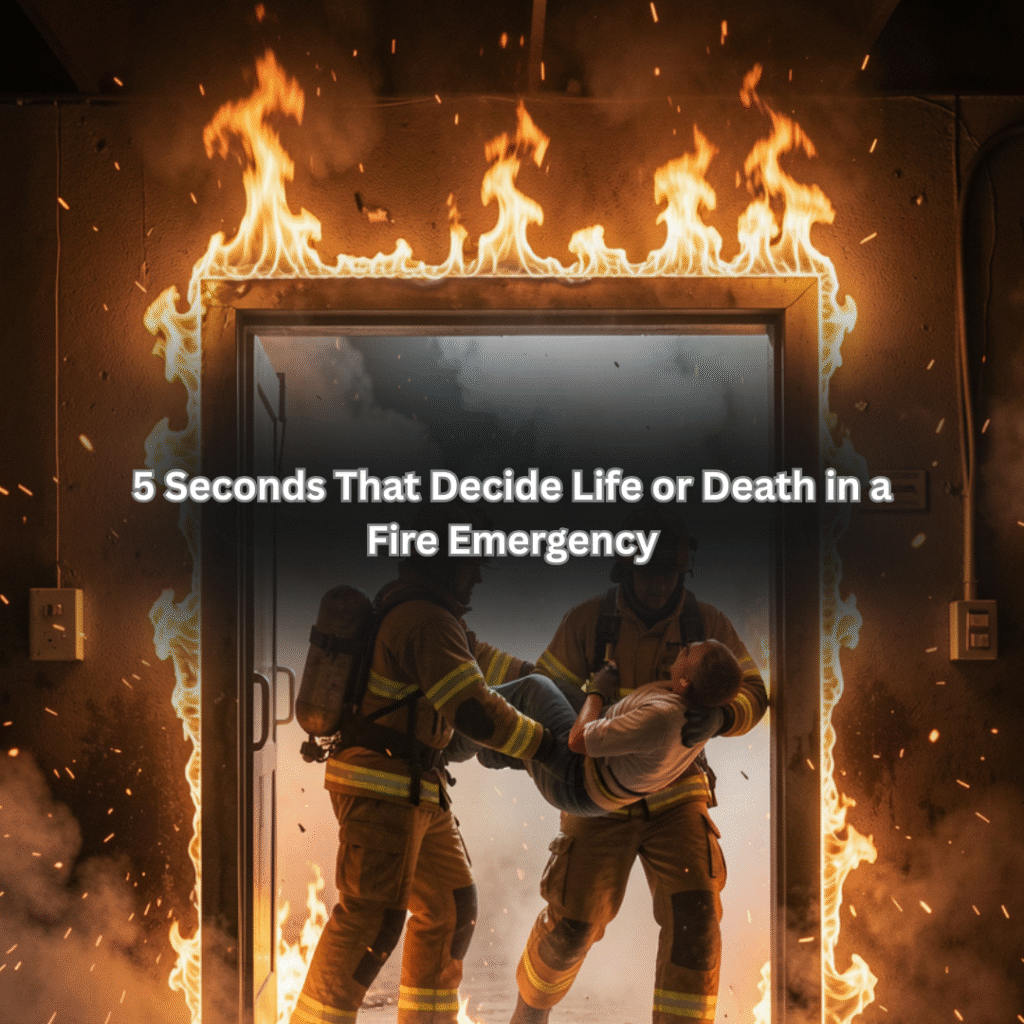
In every Fire Emergency, there’s a moment that matters most. It’s not the hour of the storm, not the long battle that follows, but the first few seconds when lives hang in the balance. Those first critical seconds decide whether people walk away, or tragedy strikes. Immediate decisions, quick alerts, and early action transform chaos into safety.
Across the world, recent incidents show the difference those first responses make. In Karachi, a devastating mall blaze claimed dozens of lives because safety warnings were ignored, exits were locked, and responders struggled to reach the scene quickly. Survivors spoke about how trapped they felt as smoke thickened. What should have been early containment turned into one of the worst Fire Emergency disasters in the region’s recent history.
In Massachusetts, the massive assisted-living facility fire that broke out in 2025 tragically resulted in loss of life and injuries. Investigators pointed to the rapid spread and difficulties in evacuation as key factors. Once the fire started, the precious early seconds of response could not stop acceleration through corridors where elderly residents were dependent on help. This kind of failure in early recognition and evacuation planning sadly influenced the death toll.
Closer to home in Dubai, responses to building fires highlight how fast mobilization can save lives. In a high-rise fire in Al Barsha, fire crews reached the scene within minutes and evacuated residents safely, meaning that though the blaze was intense, the Fire Emergency did not lead to casualties. This shows the power of early arrival and coordinated action when every second counts.
These real situations reveal one hard truth: the Fire Emergency clock starts the moment a flame is spotted or an alarm sounds. Every delay in detection, every slow step in response, amplifies risk.
Why Those First Seconds Matter
In a typical Fire Emergency, fire doubles in size every minute without suppression. That rapid growth means people can encounter dangerous smoke levels or structural hazards within seconds. Early detection alerts residents and responders faster. A smoke detector that goes off right away gives people a chance to evacuate before conditions turn deadly. Smart systems and regular maintenance can be the difference between life and death.
That’s why the early seconds of a Fire Emergency are so critical. They dictate how effectively people escape, how soon responders arrive, and how much damage is prevented.
What Often Goes Wrong
History is clear about common failures in a Fire Emergency response. Locked exits, blocked stairwells, or malfunctioning alarms turn a manageable blaze into a disaster. When warnings are ignored or safety systems fail, the first seconds of ignition slip into minutes of uncontained fire.
In the Karachi shopping complex fire, poor ventilation and locked exits turned a Fire Emergency into a siege. Survivors said that even after the fire was declared an official emergency, the initial response lacked coordination to contain flames and guide evacuation. Many victims were caught before effective escape paths were established.
Across the world, similar patterns emerge in residential fires where smoke alarms were missing or inactive, or where fire safety checks were neglected. Without early alerts, residents lose those first vital seconds to react. Smoke spreads so quickly that occupants can become disoriented before emergency responders even arrive.
What We Can Change
Fixing this isn’t only about faster fire trucks. In every Fire Emergency, preparation and prevention are your first tools. Start with detection. Install reliable smoke alarms, check them often, and pair them with automatic suppression systems. These early warning systems give occupants those critical first moments to get out safely.
Second, create and practice evacuation plans. When families and workers know exactly what to do, the response becomes second nature. During a Fire Emergency, training translates into instinct. It removes hesitation and chaos from fast-moving situations.
Third, maintain infrastructure. Regular checks on alarms, sprinklers, and escape routes stop small issues from becoming deadly during a Fire Emergency. Properties that delay or skip fire safety maintenance give fire a head start.
Firefighters and Rapid Action
Firefighters themselves train to make the first seconds count. In many responses, the goal is the same: arrive quickly, assess rapidly, and act with precision. A coordinated first response can limit fire spread dramatically. In some UAE emergencies, swift action prevented casualties, even in tall buildings where conditions can worsen with alarming speed.
That preparedness also means learning from each Fire Emergency. Fire departments study responses, refine strategies, and share insights on how to improve reaction time. That’s why investing in community training, regular drills, and modern detection tech is part of improving outcomes everywhere.
Real Stories, Real Lessons
Consider this: when firefighters reached the scene in Al Barsha quickly, they prevented what could have been a deadly Fire Emergency. Residents were evacuated safely before smoke inhalation or structural hazards could claim lives.
Contrast that with the tragic loss in Karachi where early warnings were ignored, exits were locked, and those first critical moments slipped away.
Both incidents were Fire Emergencies. But preparedness and early action made all the difference.
Conclusion
In every Fire Emergency, the first seconds are the most important. They decide whether people escape safely or suffer harm. They determine whether responders can contain the threat or whether it grows beyond control. When detection is quick, when alarms function, and when people act without hesitation, the worst outcomes can be avoided.
If there’s one message from these real cases it’s this: invest in safety before fire arrives. Practice evacuation plans. Maintain alarms and suppression systems. Train your team and family on what to do the moment a fire starts. Because in a Fire Emergency, life and death often depend on those first few seconds.
Contact us
Partner with Blue Diamond Firefighting and discover how our project management expertise can simplify and strengthen your next project.
📧 info@bluediamondfm.com
📞 04 254 5445 / 800 2583